Curvenote Screening
Scientific content screening and review workflows
Give important decisions the review they need.
Not every decision about scientific content can be automated. Organizations need the right people to evaluate work, assess whether it is ready and sign it off before it moves on. Curvenote Screening gives you review workflows configured to your own policies and procedures. Bring human judgment and automated checks together, so reviewers focus on the decisions that need them.
Your policies. Your reviewers. Nothing leaves unchecked.
Built around your policies.
Configure review steps for scientific integrity, medical, legal and intellectual property review, in the order your organization requires.
Judgment where it matters.
Automated checks handle the routine, so reviewers spend their time on the calls only people can make.
Smarter sign-offs.
Route study reports, disclosures and manuscripts through scientific, legal, IP and editorial approvals, with workflows tailored to your team's processes.
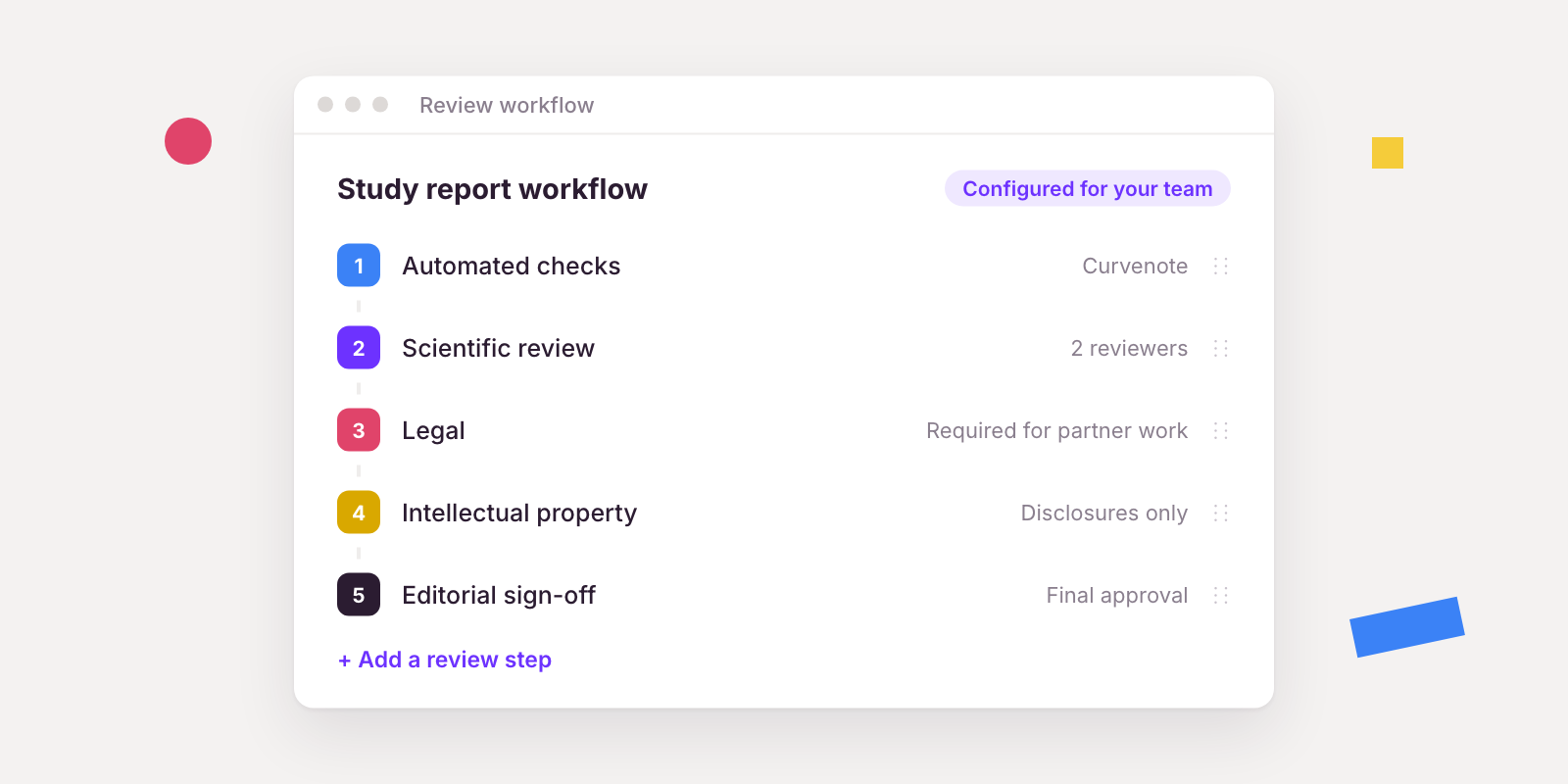
Your review process, configured
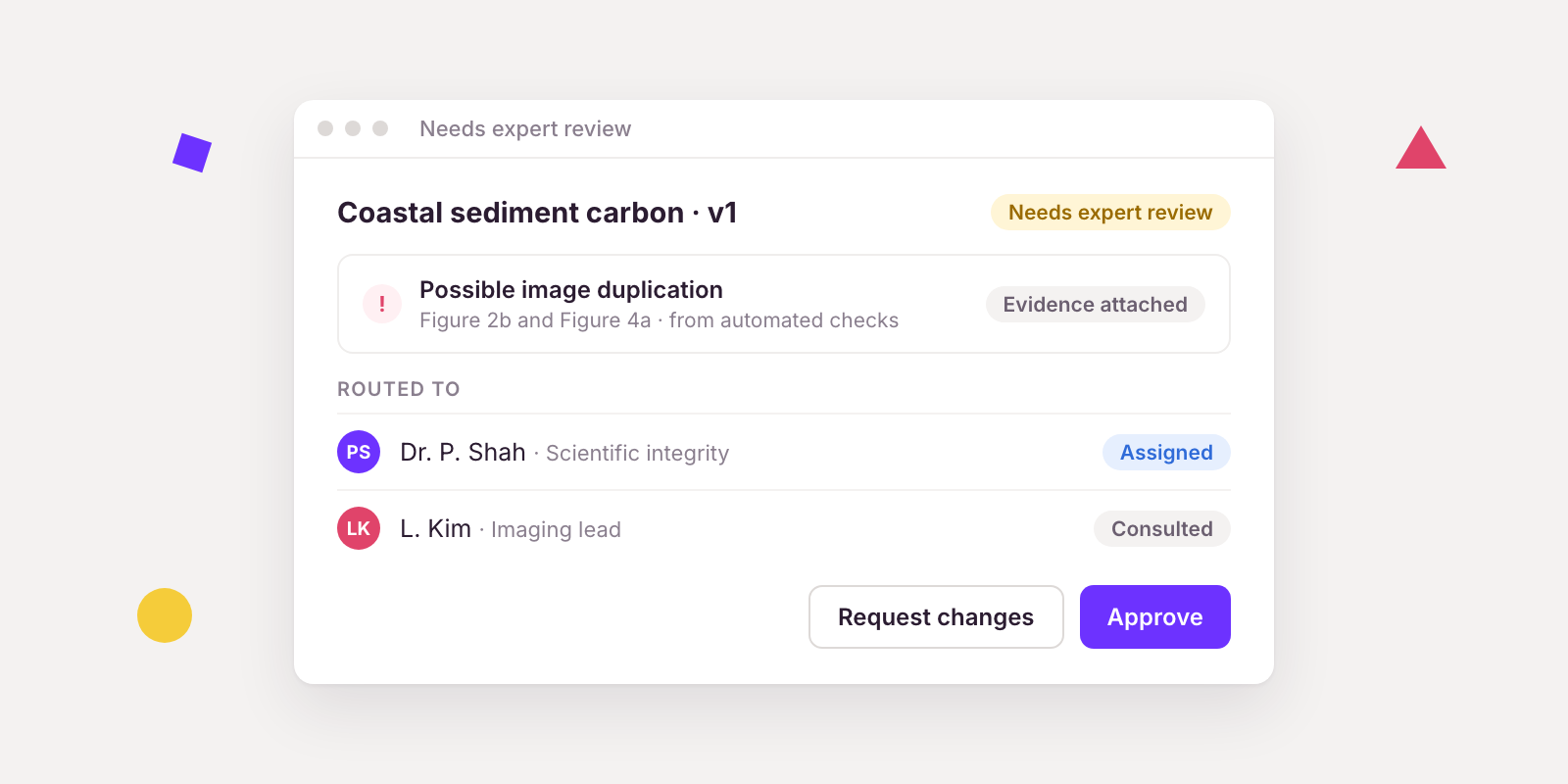
Flagged work goes to an expert
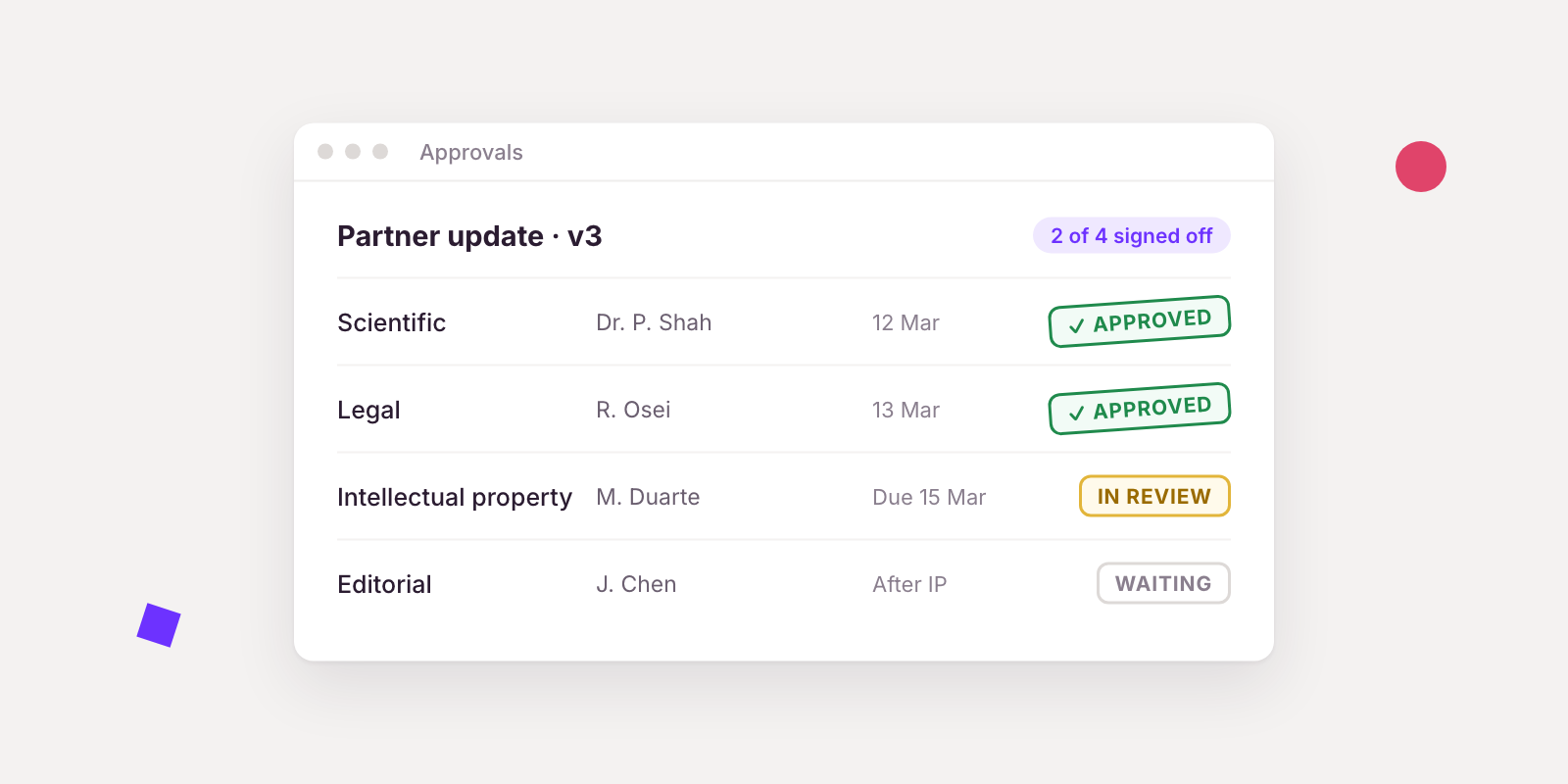
Sign-off at every stage
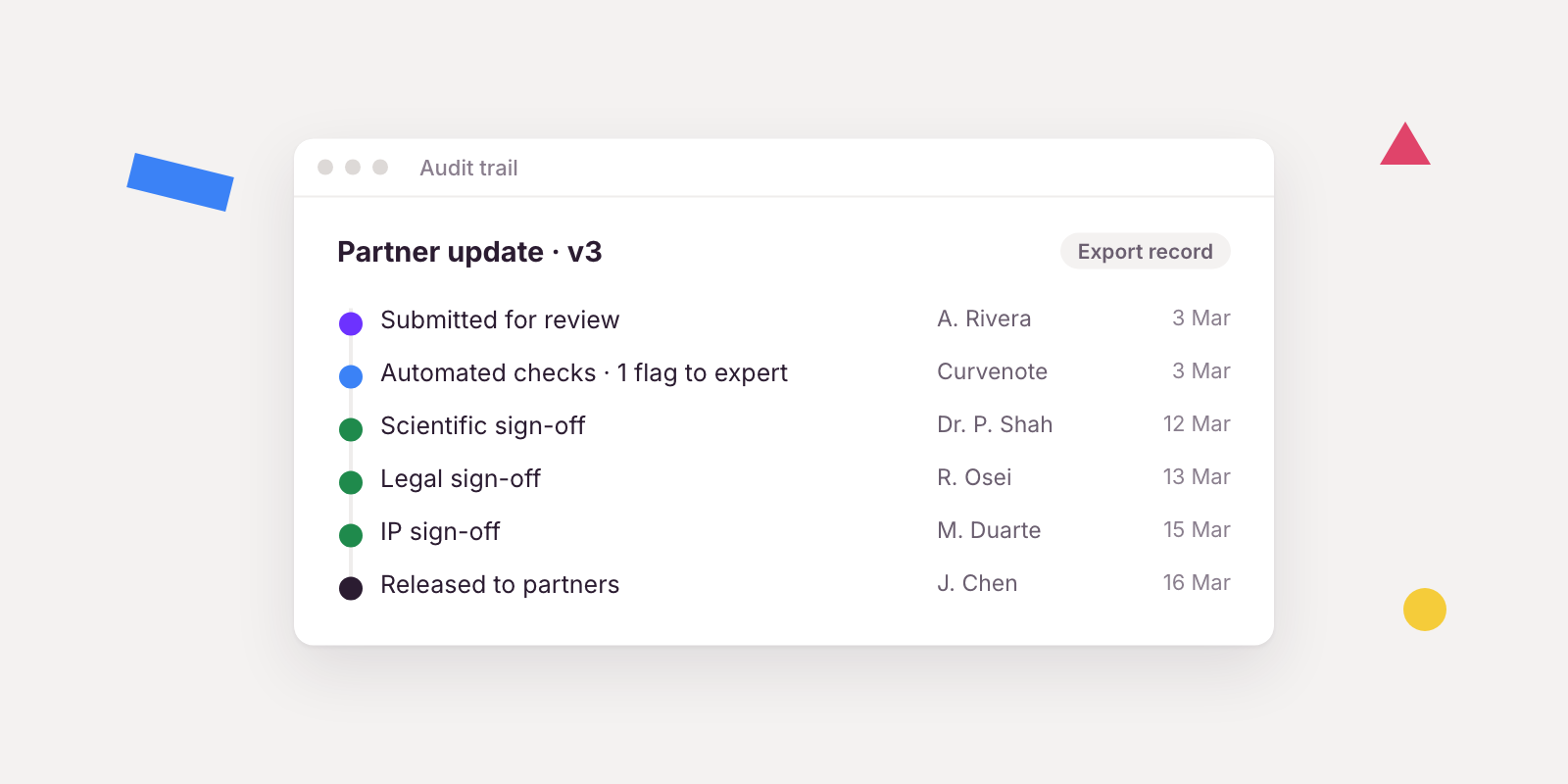
A record of every decision
Different teams. Different outcomes.
Who it's for
Biotech and life sciences R&D.
Sign off work before it goes to partners, investors or the public.
Who it's for
Funders and venture builders.
Review progress and outputs across a program or portfolio.
Who it's for
Publishers and societies.
Configure and run editorial and integrity screening that matches your policies.
Who it's for
Preprint servers.
Make responsible release decisions at the scale and pace preprint distribution demands.
Your entire review workflow, working together.
Connect screening with submission intake, automated checks, scientific content management and analytics—all within Curvenote.
Questions
The questions that come up before teams get started.
Yes. Screening is configured to your organization's own policies, procedures and workflows. Curvenote runs your process; it does not make legal or regulatory judgments.
Screening combines automated checks with human review. We configure the specific steps around your requirements.
Yes. A study report, a disclosure and a manuscript can each have their own stages, in their own order, with their own approvers.
Both. Legal and IP can sign off in parallel, while editorial waits until both are done.
You choose named people, teams or roles for each stage, and can require more than one sign-off where your policy calls for it.
Yes. Stages and approvers can be updated as your policies change, without disrupting work already in progress.
The work is held. Depending on how the stage is set up, it goes back to the author to fix or to the right expert with the evidence attached.
The name, role, date, decision, any comments and the exact version that was approved.
A new version is created and the checks run again. You decide whether earlier sign-offs carry over or need to be repeated.
Only the people with a role in it. Access is set per stage, so confidential material stays limited until it's released.