Curvenote Checks
Automated checks for scientific content
Catch issues before content moves forward.
Scientific content has to meet different requirements depending on where it's going. A study report, a patent review package, a climate disclosure or a manuscript may each need different information, formats and supporting material. Curvenote Checks applies consistent, configurable checks to your content. Validate structure, metadata and required sections, catch issues earlier and cut the repetitive manual work before the next stage of review.
Your standards, checked automatically.
Configured to your standards.
Set the rules your organization needs, from required sections and sources to metadata and formatting.
Catch it early.
Problems surface before work reaches a reviewer, so people spend time on judgment, not chasing missing pieces.
Run at any stage.
Run automated checks at intake, before screening and review happen. Release with confidence so every stage of your workflow meets the standards you've set.
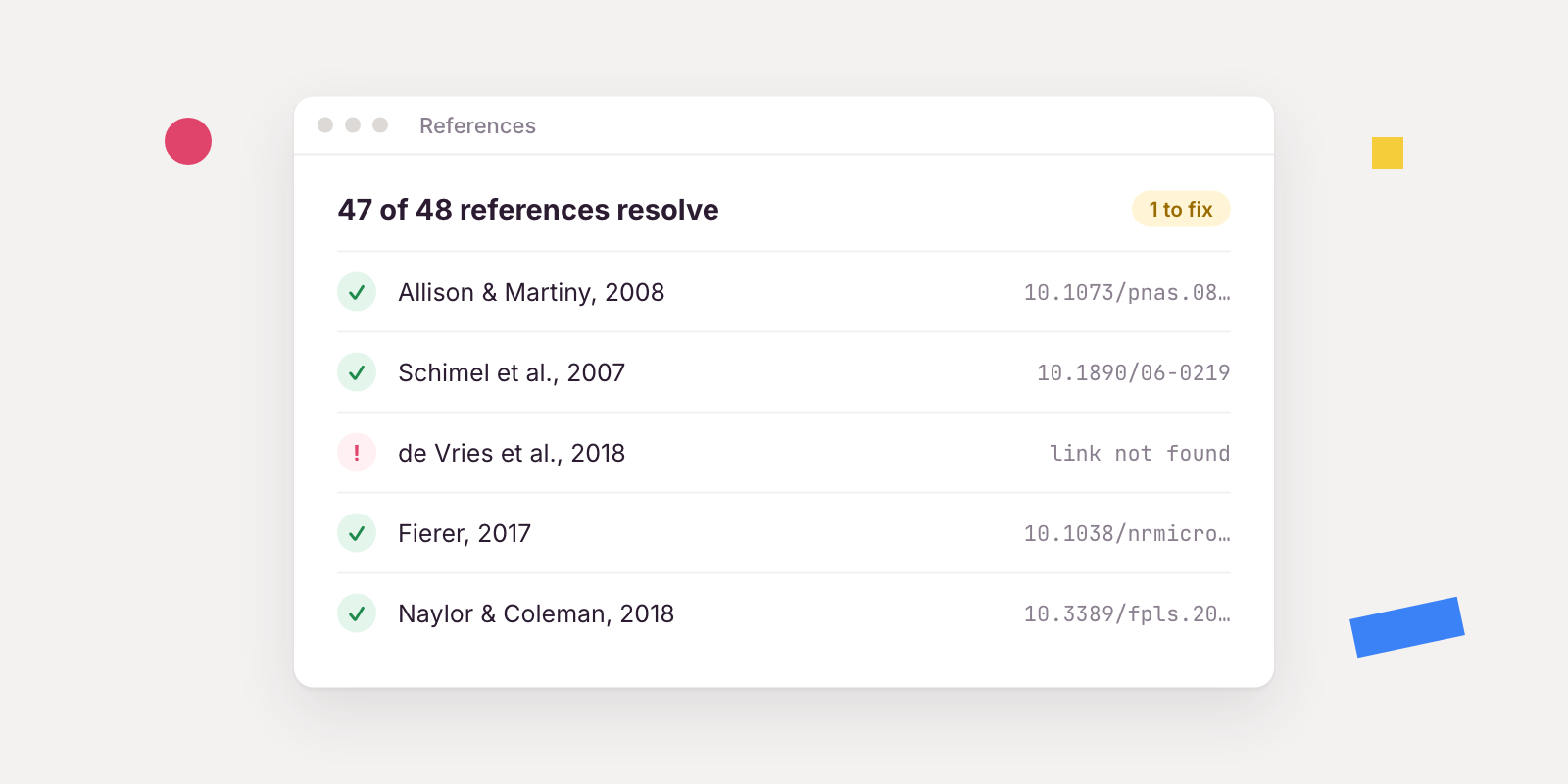
References that resolve
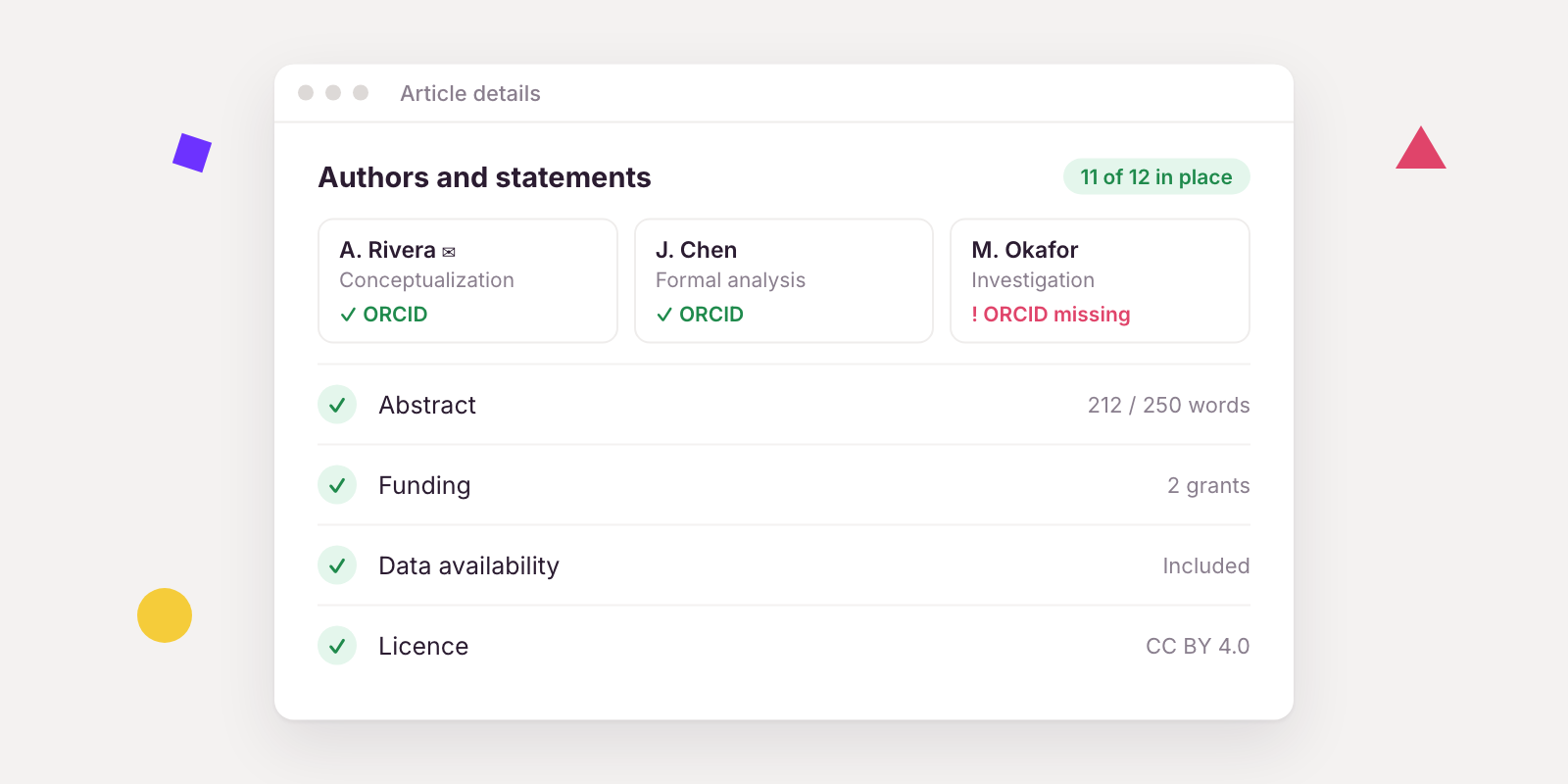
Every detail in place
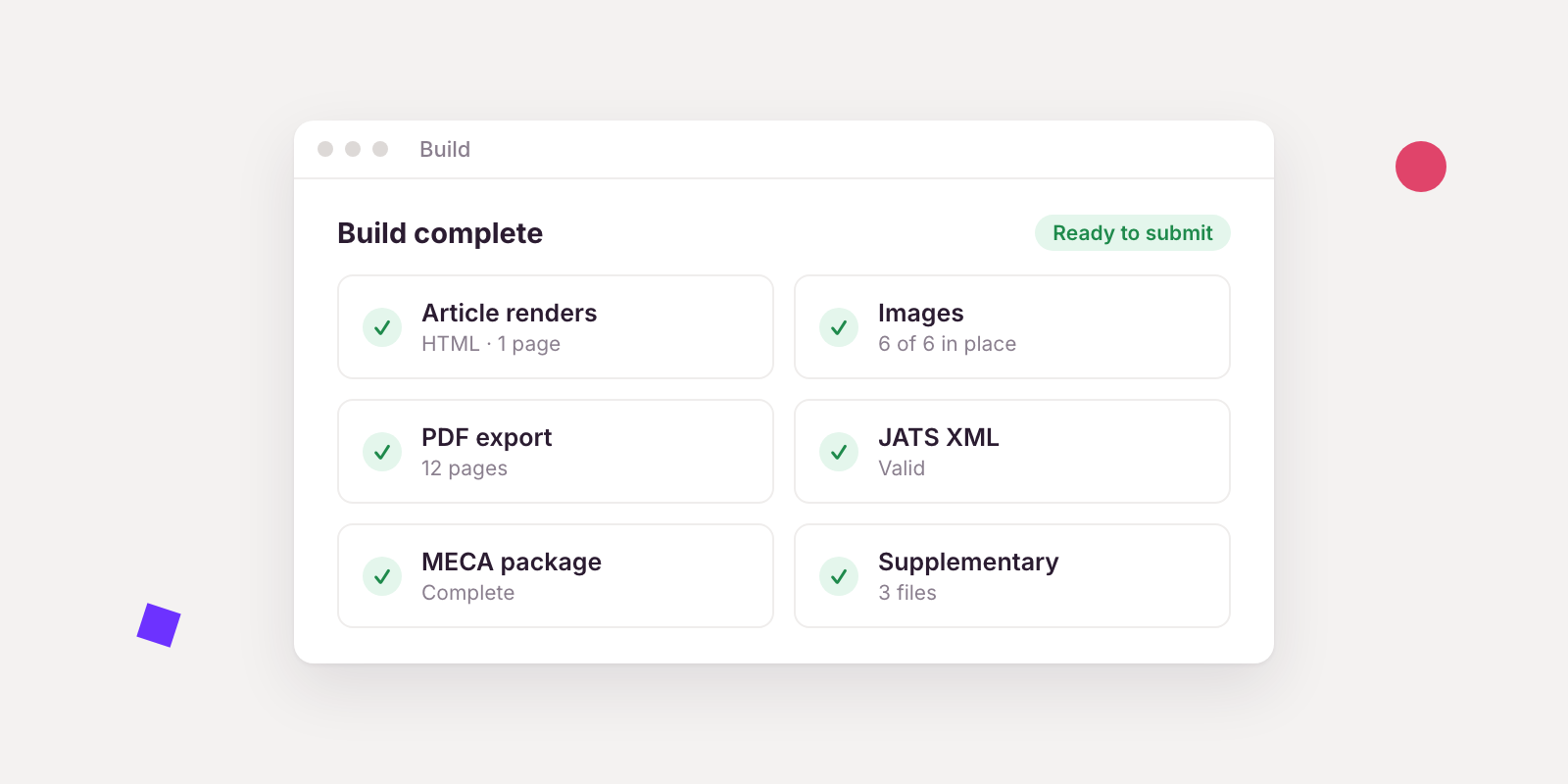
Submission-ready, by design.
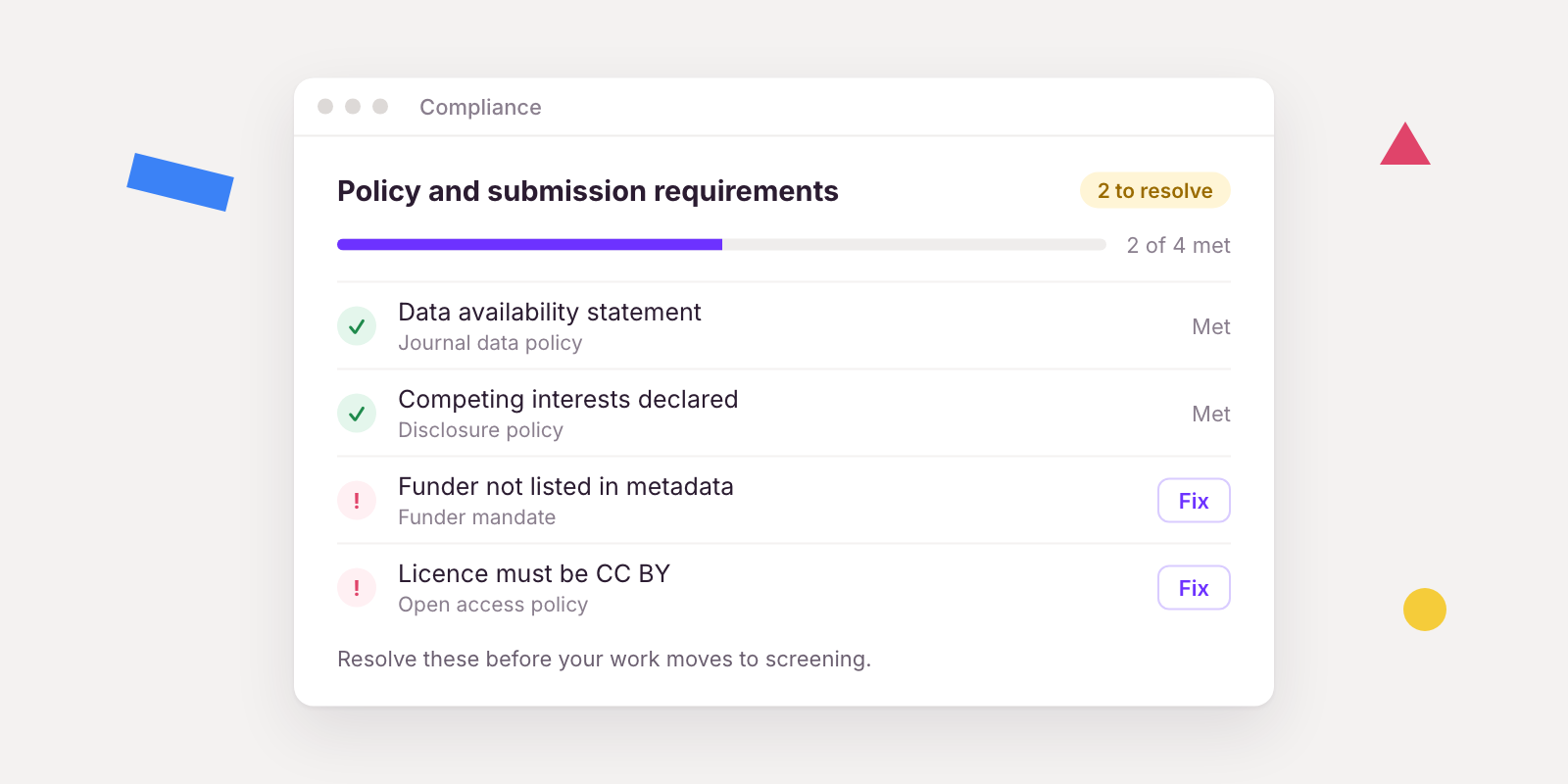
Know where you stand on compliance.
Built for scientific work, whatever the format
Who it's for
R&D and technical teams.
Hold reports to a consistent standard before they are shared.
What you can build
Reports and technical docs.
Make sure required data, sources and disclosures are in place.
Who it's for
Publishers and preprint servers.
Validate structure and metadata before content reaches an editor.
Your entire quality workflow, working together.
Connect automated checks with submission intake, screening, scientific content management and analytics—all within Curvenote.
Questions
What teams ask us first, written down so you don’t have to.
Structure, metadata, required sections and content requirements, configured to your organization's standards.
No. Checks handle the routine so your team can focus on decisions that need judgment.
The author sees what failed and why, with a clear way to fix it. Depending on how you set it up, the work either waits until the issue is resolved or moves on flagged for screening.
Yes. A manuscript, a set of training materials and a technical report can each have their own checks, matched to the standards that apply to them.
Yes. Every result is kept with the version it ran on, so you can see what passed, what was fixed and when.
Some checks use AI, and they are marked as such. Like every check, they give people evidence to weigh, not a verdict.