OpenRxiv & Curvenote’s new Reader launch took to the stage at FORCE11 2026
Mike Morrison · June 19, 2026
FORCE11 is a conference where everybody who attends is trying to improve scientific publishing in some capacity. It’s full of revolutionaries and innovators, and I finally got to attend! I literally bumped into people who created many of the scientific reform movements I’ve adored from afar: Ginny Barbour of DORA, Ian Mulvany who helped create eLife Lens, Daniel Katz of JOSS, and Tracy Teal of openRxiv.
Sometimes, it’s actually pretty awesome to meet your heroes.
openRxiv’s Curvenote Reader launch started discussions
We were able to show many people the Curvenote Reader product we’ve just launched with OpenRxiv and get early feedback on it.
There was a pre-conference workshop by Tracy Teal at openRxiv on the Curvenote Reader launch.

Figure 1:Tracy Teal presenting on Curvenote Reader at the openRxiv Labs workshop before the conference.
I gave a talk on Curvenote’s approach to connected publishing, which you can see below!
Figure 2:In this talk, Mike Morrison, PhD (UX Lead at Curvenote) demos ‘Connected Publishing: Curvenote’ a new product where research stays linked to its data, code, and notebooks from lab all the way through to publication - no more copy-paste science.
And Nokome Bentley and Tracy Teal gave a talk that wasn’t directly about Curvenote Reader, but indirectly showcased the open source technology that makes Curvenote Reader able to speak a standardized language — OXA, the Open Exchange Architecture.

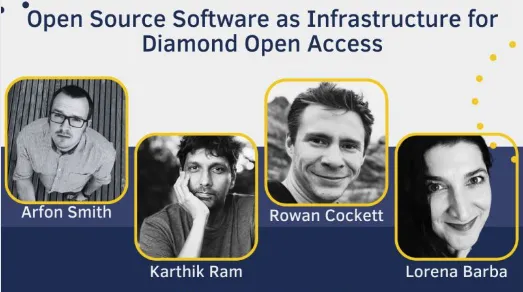
Nokome also gave a presentation on the FORCE11 Working Group that Rowan helped run in 2025, Preserving Interactive Research Content. THis working group helped inform how we work with preserving interactive and computational content in our publications and journals.
Our Curvenote Reader & OpenRxiv project showed up in other talks organically
I was really encouraged by the reaction to our demonstrations of Curvenote Reader: Curvenote’s Reader launch with openRxiv showed up in other talks as a live reaction to our presentations about it.
Two keynotes — Ginny Barbour of DORA and Ian Mulvany’s talk on the future of AI and publishing — both called out the openRxiv & Curvenote Reader project as an innovation in scientific publishing that they’d seen at the conference and were really excited about.

Figure 4:Ginny Barbour’s closing keynote mentioned our openRxiv work specifically as something she was excited about.
Ginny’s keynote captured this really well. It was about finally fixing scientific publishing, and it specifically mentioned the openRxiv Curvenote partnership.
That meant a lot to me, because I know people of Ginny and Ian’s caliber have seen (and driven!) a lot of efforts to change publishing, so getting a callout from them is pretty motivating and affirming that we’re doing something special.
The response to my own talk on Curvenote Reader was also surprising.
During the Q & A after my own talk, I got the impression that even skeptical people were won over — maybe by the scale of our openRxiv Reader project, because it means we’re actually changing things — not just introducing some one-off prototypes. We have translated and deployed over 500k article versions with openRxiv to date.
People came up to me and asked specifically about converting their preprint to a Curvenote Reader upgraded preprint. To me, that says our article design is getting good enough to start attracting serious researchers. And we’re still improving it.
Overall, a super inspiring event and I’m looking forward to the next one!